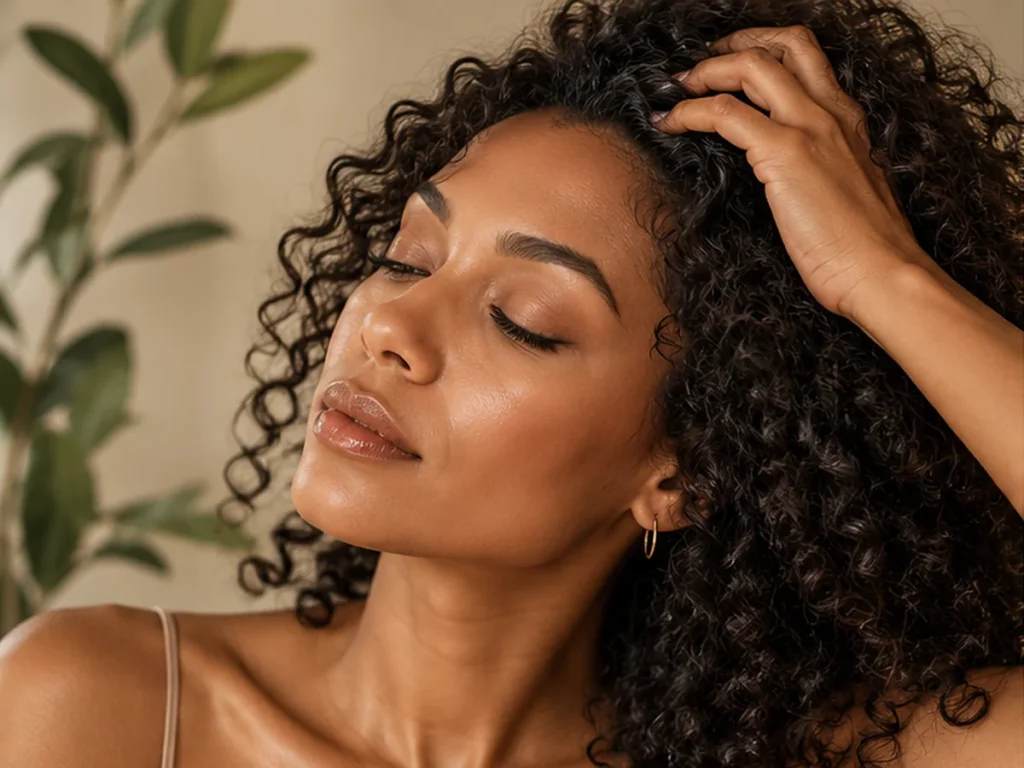
An itchy scalp. Flakes that keep returning. Product buildup that seems impossible to manage. Or a scalp that feels uncomfortable no matter what shampoo you use.
If any of this sounds familiar, you may have tried switching products, washing more often, applying oils or following advice from social media. Sometimes those changes help. Other times, they leave you more confused than before.
The truth is that getting your scalp under control starts with understanding what your scalp actually needs.
Your scalp and your hair are connected, but they don’t always have identical needs. A routine that makes your curls feel soft may not be the right routine for an irritated scalp. Similarly, a cleansing product that helps manage flakes may leave your hair lengths feeling dry if you don’t use it appropriately.
The goal isn’t to collect more products. It’s to build a thoughtful, manageable routine that works for you.
Why Does Your Scalp Feel Out of Balance?
Your scalp is skin, and like the skin on the rest of your body, it can respond to cleansing habits, products, weather and underlying skin conditions.
Common concerns include:
- Flaking: Visible flakes can be associated with dandruff, dryness or other scalp conditions.
- Itching: An itchy scalp may be related to irritation, dandruff, product sensitivity or a medical condition.
- Excess oil: Your scalp may become oily between washes, affecting how often you need to cleanse.
- Product buildup: Styling products and oils can accumulate, making cleansing more important.
- Tightness or discomfort: Certain products, styling practices or skin conditions may contribute to sensitivity.
One important distinction is that dry scalp and dandruff are not necessarily the same thing. They can produce similar symptoms, but may require different approaches.
Rather than assuming every flake means dryness, pay attention to the complete picture. Persistent or severe symptoms should be assessed by a qualified healthcare professional.
1. Understand Your Scalp Before Changing Your Products
Before buying another shampoo or scalp treatment, consider what you’re actually experiencing.
Does your scalp become itchy immediately after washing? Does discomfort appear after applying a particular styling product? Do you notice flakes a few days after cleansing? Is your scalp oily while your hair lengths feel dry?
These details matter.
You might find it helpful to make a few simple observations:
- How does your scalp feel on wash day?
- What changes two or three days later?
- Which products are touching your scalp?
- Do certain hairstyles create tension or discomfort?
- Have you recently introduced a new product?
This isn’t about diagnosing yourself. It’s about becoming more aware of your routine so you can make better-informed decisions and explain your concerns clearly if you need professional advice.
2. Build a Cleansing Routine Around Your Actual Needs
There is no single washing schedule that works for everyone.
Some people have oily scalps and may need frequent cleansing. Others have curly, coily, thick or dry hair and may benefit from a different routine.
Your scalp’s condition, your hair texture, your activity level and the products you use can all influence how often cleansing makes sense.
The American Academy of Dermatology recommends choosing washing habits based on your hair and scalp needs, rather than following a universal schedule.
A few helpful principles are:
Cleanse your scalp, not just your hair. Shampoo should reach the scalp so it can help remove oil, dirt and accumulated products.
Rinse thoroughly. Leaving cleansing products behind can contribute to irritation.
Condition your hair appropriately. Focus on the areas that need conditioning, particularly if you have dry, curly or textured hair.
Avoid unnecessarily harsh scrubbing. Vigorous scratching or abrasive tools can aggravate an already uncomfortable scalp.
If you use protective styles or extensions, think about how you will maintain scalp hygiene while wearing them.
A consistent routine is generally more useful than repeatedly making dramatic changes.
3. Choose Products for Their Purpose, Not Their Popularity
An expensive product is not automatically the right product for your scalp.
And a product recommended by someone with beautiful hair may not be suitable for your particular needs.
Start by considering the purpose of each item in your routine.
Is it designed to cleanse, condition, style or address a specific scalp concern?
If you have mild dandruff, an over-the-counter dandruff shampoo may help. Depending on the product and local availability, common anti-dandruff ingredients include ketoconazole, selenium sulfide and salicylic acid.
Always follow the product instructions. Some treatments need to remain on the scalp for a specified period before rinsing, while others may require different directions.
If your hair is curly or coily, take extra care to avoid unnecessarily drying the lengths when using a scalp-focused treatment.
And if a product repeatedly causes burning, redness or significant irritation, stop using it and seek appropriate professional advice.
Effective hair care should be based on understanding, not guesswork or product trends.
4. Be Mindful of Oils, Styling Products and Scalp Treatments
Oils are common in hair-care routines, particularly for textured hair, but they aren’t automatically the solution to every scalp concern.
A product may help with the feel or manageability of your hair without addressing the cause of an itchy or flaky scalp.
Similarly, layering multiple scalp oils, creams and styling products can make it harder to understand which products are helpful and which may be contributing to buildup or irritation.
Try to keep your routine purposeful.
Ask yourself what each product is doing, whether it belongs on your scalp or your hair lengths, and whether you are using more products than you actually need.
The aim is not to eliminate every product. It is to make each product earn its place.
5. Think About How You Style Your Hair
Your scalp routine isn’t limited to wash day.
Hairstyles that create persistent pulling or tension can make your scalp uncomfortable and, over time, may contribute to hair damage or traction-related hair loss.
Braids, ponytails, extensions and other styles should not regularly cause pain.
If a hairstyle feels excessively tight, it is worth reconsidering the tension rather than accepting discomfort as part of the styling process.
When wearing extensions or protective styles, consider your cleansing routine, how you can access your scalp and whether the style remains comfortable.
Your hairstyle should complement your hair care—not make it more difficult.
6. Create a Simple Scalp-Care Plan You Can Maintain
You don’t need a complicated ten-step routine to begin making more intentional choices.
Start with a simple plan:
Step one: Identify your main scalp concern and notice when it occurs.
Step two: Review the products you currently use on your scalp.
Step three: Establish cleansing habits that make sense for your scalp and hair type.
Step four: Use any scalp-specific treatment as directed, rather than adding several new products at once.
Step five: Observe whether your symptoms improve, remain unchanged or become worse.
Keeping a short record can help you recognise patterns over time.
It also gives you useful information to discuss with a dermatologist if your scalp concerns persist.
When Should You See a Dermatologist?
Hair-care education has an important role, but not every scalp concern can be resolved through changes to your routine.
Persistent dandruff after several weeks of appropriate over-the-counter treatment, intense itching, significant redness, swelling, sores, pain or noticeable hair loss may require medical assessment.
Conditions such as eczema, psoriasis, seborrheic dermatitis and fungal infections can sometimes resemble ordinary dryness or dandruff.
A dermatologist can determine whether medical treatment is needed.
Hair coaching is not a replacement for diagnosis or medical treatment. The two can complement each other: medical professionals address scalp disease, while hair-care education helps you understand and manage your everyday routine.
How Therapeutic Hair Coaching Can Help
One of the most frustrating parts of hair care is having plenty of products but very little clarity.
You may know what you’ve been told to buy without fully understanding why you’re using it—or whether it suits your hair.
That is where a more personalised, education-led approach can be valuable.
Founded by Houston-based hairstylist and educator Kimberly Spikes, Therapeutic Hair Coaching is designed to help individuals better understand their hair, products and everyday care decisions.
Through The Fioren Method, Kimberly brings an ingredient-conscious, brand-agnostic philosophy to personalised hair education.
Rather than beginning with a particular product brand, the emphasis is on understanding the individual, their hair and the routines influencing their experience.
For someone navigating confusing product choices or struggling to establish a consistent routine, this can provide a clearer starting point.
Explore Therapeutic Hair Coaching →
Your Scalp Is Only One Part of Your Hair-Care Routine
Learning about your scalp is an important step, but your hair lengths need attention too.
Cleansing, conditioning, detangling, styling and professional maintenance all play a role in keeping hair manageable and reducing unnecessary damage.
For guidance on caring for your hair between appointments, read our companion article:
How to Maintain Healthy Hair Between Salon Visits →
Final Thoughts
Getting your scalp under control doesn’t mean achieving a perfectly flawless scalp every day.
It means learning to recognise what is normal for you, being more intentional about the products you use and knowing when a concern needs professional attention.
Start with understanding. Keep your routine manageable. And don’t be afraid to seek guidance when your current approach isn’t working.
Better hair-care decisions begin with better understanding.
This article is intended for general hair-care education and is not medical advice. Consult a qualified healthcare professional for persistent scalp symptoms, scalp disease or hair loss.
Further reading: American Academy of Dermatology — How to Treat Dandruff
More from the journal
A more personal approach to your hair.
Explore personalised hair education and more intentional care routines.
Explore Hair Coaching ↗